✨ Is Zendesk Sell Right for You?
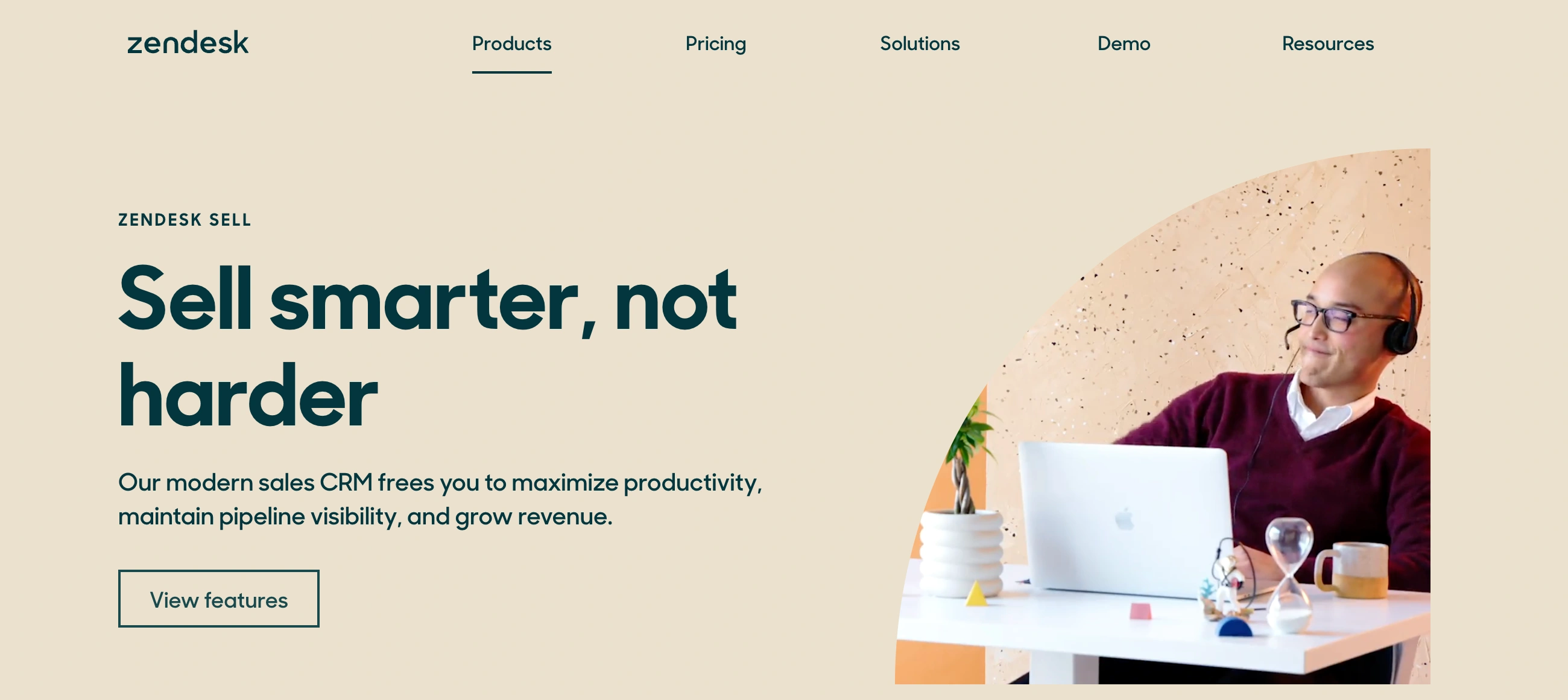
What it is: Sales CRM built by the Zendesk support team—contact management, pipeline tracking, built-in calling, and mobile-first design for field sales teams who need CRM that works on phones as well as desktops.
Best for: Sales teams already using Zendesk Support who want unified customer context. Field sales reps who live in their phones. Growing teams (5-30 people) who need more than a spreadsheet but less complexity than Salesforce.
Main limitation: Reporting stays basic compared to Salesforce or HubSpot—you get pipeline visibility and standard metrics, not sophisticated analytics. Customization options feel limited. Pricing jumps significantly at higher tiers. Works best when paired with Zendesk Support; standalone value questionable versus competitors.
Get it if: You're already paying for Zendesk Support and want sales-to-service handoffs without data silos. Your team needs mobile CRM that actually works. You value implementation speed (days not months) over endless customization.
Skip it if: You need advanced reporting and custom dashboards. You want sophisticated marketing automation (Zendesk Sell focuses purely on sales, not marketing). You're not using Zendesk Support and need standalone sales CRM—HubSpot or Pipedrive likely better fits.
🎯 Why Zendesk Sell?
Your sales and support teams operate in separate universes. Sales promises features the support team doesn't know about. Support resolves issues the sales team never hears about. Customers get frustrated repeating themselves. This fragmentation kills deals and churns customers. Zendesk Sell exists to bridge this gap—but only if you're already using Zendesk Support.
Unified Customer Context (If You Use Zendesk Support)
The killer feature: sales reps see support ticket history directly in CRM, support agents see deal stages and sales notes. When calling a customer about an upsell, you know they have three open tickets this week. When support resolves an issue, they see it's a $50K annual deal. This means fewer embarrassing disconnects and better customer experience. But here's the thing—this only matters if you're paying for both Zendesk Sell and Zendesk Support. Without Support, you're paying for integration capabilities you can't use.
Mobile-First That Actually Works
Field sales teams live in their phones, and Zendesk Sell's mobile app delivers. Add contacts during meetings, log calls immediately, update deals on the road, check pipeline between appointments. "The mobile app is fantastic, allowing us to stay connected and updated even when we're on the go," users consistently report. Competitors treat mobile as an afterthought—stripped-down versions of desktop apps. Zendesk Sell designed mobile experience first, then adapted to desktop. This translates to faster data entry and better adoption among outside sales reps.
Implementation Speed Versus Complexity Trade-Off
70% of companies get Zendesk Sell running in 7 days or less. Import contacts, configure pipeline stages, connect email, train team—done. Salesforce takes 3-6 months and consultants. HubSpot takes 4-8 weeks of dedicated onboarding. Nutshell takes 2-7 days. Zendesk Sell slots in the middle: faster than enterprise platforms, similar to SMB competitors. The trade-off: you get simple workflows that work immediately but limited customization for complex sales processes.
Built-In Calling Eliminates Tool Sprawl
Voice feature includes calling and texting directly in CRM at no extra cost on all plans. Click-to-call contacts, automatically log calls to records, record conversations for coaching, send SMS follow-ups. This replaces Aircall subscriptions ($30-50 per user monthly) and eliminates manual call logging. Calls, emails, deals—everything lives in one interface instead of jumping between three tools.
The Honest Downsides
Reporting feels basic. You get standard pipeline reports, activity metrics, forecast views. Need custom dashboards with 15 different views? Export to Excel or switch to Salesforce. "Reporting could be more powerful and flexible," verified users note. Zendesk Sell prioritizes simplicity over analytical depth—great for small teams, frustrating for data-driven organizations.
Pricing gets expensive fast. Team plan at $19 per user monthly seems affordable, but limits you to 3 users and 1 pipeline. Most growing teams need Growth ($49) or Professional ($55) plans. At $55 per user for a 20-person team, you're paying $13,200 annually—HubSpot Professional costs similar but delivers deeper marketing automation. Enterprise tier hits $115 per user monthly ($27,600 annually for 20 users), approaching Salesforce territory without Salesforce capabilities.
Standalone value questionable. If you're not using Zendesk Support ($55-155 per agent monthly), you're missing the integration that justifies Zendesk Sell's existence. Competitors offer better features at similar prices for standalone sales CRM. Zendesk Sell makes sense as part of Zendesk ecosystem, not as isolated tool.

📈 What Zendesk Sell Users Typically Achieve
Field Sales Productivity Jumps
Sales reps spend 40-50% more time selling versus administrative work thanks to mobile-first design and automated logging. Add contacts during meetings instead of batch-entering later. Update deals between appointments. Make calls that log automatically. Check pipeline while waiting for clients. "It has proven to be an exceptional tool for managing customer interactions," verified users confirm. This translates to 5-10 more prospect touches weekly per rep.
Implementation Speed Enables Quick ROI
Teams operational within a week versus months for Salesforce means faster time to value. Sales velocity doesn't stall during 3-month implementations. New hires onboard in days not weeks. You make buying decision Monday, team productive by following Monday. For growing companies where speed matters, this beats enterprise platforms significantly.
Unified Customer Context Prevents Disconnects
Sales reps see support ticket history before calling customers about upsells—"Oh I see you had an issue last week, let me check that's resolved before we discuss expansion." Support agents prioritize tickets differently knowing it's $50K annual customer versus $500 monthly account. Customer satisfaction improves when teams operate from shared context instead of separate silos. But remember: this only works if paying for both Zendesk Sell AND Zendesk Support.
Calling Integration Eliminates Tool Sprawl
Built-in Voice replaces Aircall subscriptions saving $30-50 per user monthly. Single interface for calls, emails, deals versus jumping between three tools. Calls log automatically versus manual note-taking that never happens consistently. For 10-person team, this saves $3,600-6,000 annually in VoIP costs plus hundreds of hours in manual logging.
Where Teams Hit Walls
Month 6-12: Sales operations wants custom dashboards tracking 15 different metrics—Zendesk Sell's basic reporting can't deliver, teams start exporting to Excel weekly. Month 12-18: Marketing needs sophisticated lead scoring based on behavioral data—limited automation capabilities surface. Month 18-24: Complex approval workflows required for enterprise deals—Zendesk Sell lacks depth, workarounds get messy. Month 24-36: Scaling past 30-50 users makes Enterprise tier ($115/user) pricing prohibitive compared to Salesforce Professional ($100-150/user) with deeper capabilities.
The Standalone CRM Question
Teams using only Zendesk Sell (without Zendesk Support) frequently migrate to HubSpot or Pipedrive after 12-24 months. Why? The killer feature—sales-support integration—doesn't apply. Reporting limitations frustrate. Pricing approaches HubSpot levels without HubSpot's marketing automation. "We'd recommend looking elsewhere for your software needs, unless you're already utilizing Zendesk Support and need to add sales functionality after the fact," verified analysts conclude.
💡 Here's what works: Use Zendesk Sell when already paying for Zendesk Support and need unified customer experience. The sales-service integration justifies costs and limitations. Skip Zendesk Sell for standalone sales CRM—HubSpot delivers better marketing automation at similar prices, Pipedrive offers better value for pure sales tracking, Salesforce provides superior reporting for data-driven teams.
🛠️ How Zendesk Sell Works
Think simplified Salesforce with better mobile experience. The learning curve stays gentle compared to enterprise platforms.
Setup
Sign up for 14-day free trial with full Professional plan access, no credit card required. Import contacts via CSV, direct sync from Gmail/Outlook, or migrate from Salesforce, HubSpot, Pipedrive using built-in tools. Configure sales pipeline by adding deal stages—Prospecting, Qualified, Proposal, Negotiation, Closed Won, Closed Lost. Connect email in 5 minutes for automatic conversation logging. Add team members and assign permissions. Total setup time: 3-8 hours for basic implementation including data import. Complex migrations with custom fields take 2-3 days.
Team Onboarding
Schedule walkthrough with Zendesk team (included free on paid plans). Reps learn to add contacts manually or via mobile app, make calls using built-in Voice, log emails automatically with sync, drag deals through pipeline stages, set tasks and appointments. Most teams productive within first day. "The implementation went very smoothly, support from Zendesk staff was great, and I was up and running with Zendesk in days," verified user confirms.
Daily Sales Workflow
Start day reviewing tasks—calls to make, emails to send, follow-ups scheduled. Click Task Player to work through list sequentially. Call contacts directly from CRM using Voice—calls log automatically to contact records with duration and notes. Send emails from Zendesk with tracking to see opens and clicks. Add contacts from LinkedIn using browser extension or mobile app during meetings. Update deal stages by dragging cards across pipeline board. Tag teammates in notes for collaboration. Set reminders for next actions.
Mobile Sales Management
Install iOS or Android app. Add contacts by scanning business cards or manual entry after meetings. Make calls that log automatically. Update deals between appointments. Check pipeline dashboard before client meetings. Voice memos convert to contact notes. Location tracking shows where you added contacts (helpful for conference follow-up). The mobile experience feels complete, not like a stripped-down desktop version.
Lead Enrichment & Research
Enter company name and Zendesk Sell automatically pulls available data—company size, industry, revenue, decision-makers. This contact enrichment happens in background using third-party data sources. Quality varies—well-known companies get detailed info, smaller businesses get basic details. Saves research time but don't expect LinkedIn Sales Navigator depth.
Reporting & Forecasting
Standard reports show pipeline value by stage, win rates, sales cycle length, activity per rep, forecast versus quota. Generate reports in minutes without building complex formulas. Export to CSV for deeper analysis in Excel. Create basic custom reports using filters and date ranges. The reporting works for pipeline management but falls short for sophisticated revenue operations. "Reporting and automation are more limited than some larger CRMs," users consistently note.
Integration Ecosystem
Connect with 100+ apps through native integrations or Zapier. Popular connections: Slack for deal notifications, Mailchimp for marketing lists, QuickBooks for invoicing, Zoom for meeting scheduling. API access on Professional tier and above enables custom integrations. The integrations cover common business tools but feel limited compared to Salesforce's thousands of apps.
⚙️ Core Features & Performance
Contact & Lead Management
Unlimited contacts on all plans means no surprise bills when database grows. Store standard fields plus custom fields for industry-specific data. Activity timeline shows every email, call, meeting automatically logged. Tag contacts for segmentation. Merge duplicates with one click. Smart lists auto-update based on criteria like "deals over $10K in proposal stage." Search works fast even with 50,000+ contacts. The contact database handles essentials smoothly without overwhelming complexity.
Pipeline & Deal Tracking
Visual pipeline shows deals as cards moving across stages. Single pipeline on Team plan, unlimited pipelines on Professional and Enterprise. Each pipeline customizable with unique stages matching different sales processes—new business, renewals, partnerships. Probability scoring estimates close likelihood. Deal aging highlights opportunities stalling too long. Pipeline reports forecast revenue and identify bottlenecks. Multiple pipelines matter when running different sales motions—SaaS annual contracts versus transactional monthly deals require different tracking.
Built-In Calling & Texting
Voice feature provides phone numbers in 40+ countries at no extra cost beyond plan price. Click-to-call from any contact record. Call recording for coaching and compliance. Call scripts display during conversations. Voicemail drop saves pre-recorded messages. SMS capability texts prospects directly from CRM. Conference calling connects multiple parties. Calls log automatically with duration, recording link, and notes. This eliminates separate VoIP subscriptions and manual call logging that kills adoption elsewhere.
Email Integration & Tracking
Gmail and Outlook sync logs all conversations automatically to contact records. Send emails from Zendesk with open and click tracking. Email templates save common messages. Email sequences automate follow-up drips—send initial email, wait 3 days, send follow-up, wait 5 days, final touch. Track which emails drive responses. "Email tracking is one of the best features," users report. The integration just works without constant re-authentication issues plaguing competitors.
Sales Automation
Workflow automation triggers actions based on deal changes—when deal enters "proposal" stage, create task to send quote, notify manager, update close date. Lead scoring assigns points based on company size, engagement, and fit. Round-robin lead assignment distributes incoming leads across team fairly. Task automation creates follow-up reminders automatically. The automation handles common scenarios well but lacks sophistication for multi-step, multi-system workflows power users expect.
Mobile CRM Experience
Full-featured mobile apps for iOS and Android, not watered-down versions. Add contacts via business card scan or manual entry. Make and log calls. Update deals. Check pipeline. Create tasks. Review activity feed. Offline mode caches recent data for subway/airplane access. "The mobile app is fantastic, allowing us to stay connected," users consistently note. Mobile experience rivals desktop functionality, unusual in CRM world.
Reporting & Analytics
Pre-built reports cover pipeline forecast, win/loss analysis, activity metrics, quota attainment, sales cycle length. Customizable dashboards display key metrics. Sales leaderboards drive friendly competition. Export data to CSV for external analysis. Create basic custom reports with filters and grouping. Here's where Zendesk Sell shows limitations: no complex multi-dimensional analysis, limited visualization options, restrictive filter combinations. Teams needing sophisticated analytics export everything to Tableau or PowerBI.
Zendesk Support Integration
If you pay for both Zendesk Sell and Zendesk Support, sales reps see support tickets in customer timeline, support agents see deal information and sales history, ticket updates notify sales reps, support issues automatically create sales follow-up tasks. This unified view prevents embarrassing disconnects—calling customers about upsells while they have critical bugs unresolved. But remember: this requires paying for both products. Support starts at $55 per agent monthly on top of Sell costs.
⚠️ What's Missing: Advanced marketing automation (HubSpot excels here), sophisticated reporting and custom dashboards, deep workflow customization, extensive third-party app marketplace, territory management features, complex approval processes, AI-powered insights and recommendations.
📊 The Verdict: Our Assessment
Overall Rating: 7.8/10 - Zendesk Sell excels at mobile-first sales CRM for teams using Zendesk Support ecosystem. Choose when unified sales-service experience justifies costs. Skip when need standalone sales CRM with advanced reporting or when not using Zendesk Support.
⚠️ Trade-offs: Mobile excellence and Zendesk Support integration come at cost of limited reporting, restricted customization, and pricing that approaches enterprise CRM levels without enterprise capabilities. Standalone value questionable versus HubSpot or Pipedrive.
⚠️ Skip if: You need advanced reporting dashboards, aren't using Zendesk Support (integration value disappears), want sophisticated marketing automation, or plan to scale past 50 users where Enterprise tier pricing ($115/user) becomes prohibitive.
💬 What Users Say: Reviews & Verified Experiences
User ratings: 4.3/5 on G2 (490 reviews), 4.3/5 on Capterra (170 reviews).
👍 Pros: What Users Love
- Mobile App Excellence: "The mobile app is fantastic, allowing us to stay connected and updated even when we're on the go," verified G2 reviewer states. Field sales teams particularly appreciate full functionality on phones versus stripped-down mobile versions from competitors.
- Fast Implementation: "The implementation went very smoothly, support from Zendesk staff was great, and I was up and running with Zendesk in days," Capterra user reports. 70% of companies operational within 7 days versus months for Salesforce.
- Zendesk Support Integration: "Better customer context integrated with Zendesk Support" enables sales teams to see support tickets and avoid embarrassing disconnects when calling customers. Support teams see deal values and sales history for better prioritization.
- Built-In Calling: "First off, I want to say that their customer contact personnel and support team are absolute stars," verified reviewer notes about Voice features. Eliminates separate VoIP subscriptions and manual call logging.
- User-Friendly Interface: Multiple reviewers mention straightforward setup and clean interface that "makes features discoverable without extensive training." Sales reps actually use it versus fighting complexity.
👎 Cons: Common Complaints
- Limited Reporting: "Reporting and automation are more limited than some larger CRMs, and teams with very complex workflows may find themselves wanting deeper customization," G2 user notes. Advanced analytics require exporting to Excel or PowerBI.
- Must Integrate With Zendesk Products: "Cannot use it alone, it has to integrate with other Zendesk products, but only with Zendesk products," Capterra reviewer complains. Standalone value questionable versus competitors like HubSpot or Pipedrive.
- Serious Bugs & Support Issues: "After trial (which went well) its all downhill. We discovered three serious bugs, which their support team reproduced and confirmed, and all we got was 'we're looking at it,'" verified Capterra user reports. "Long term usage is impossible due to serious bugs and inability or unwillingness of their team to solve it."
- Expensive At Scale: "Pricing at scale: Costs increase significantly as contact count, users, or usage grows," multiple reviewers note. Enterprise tier at $115 per user monthly approaches Salesforce pricing without Salesforce capabilities.
- Complex Customization: "Customisation can be a real headache, as it needs to be completely setup before getting its full potential," verified user states. Configuration requires technical expertise despite otherwise user-friendly interface.
- Email Integration Problems: "After over 6 months of the team not being able to connect their emails so the rest of the team could see conversations with members, we called it quits," Capterra reviewer reports. "Customer service was never helpful when it came to us asking for help."
🚫 3 Critical Mistakes to Avoid
Mistake #1: Buying Zendesk Sell Without Zendesk Support
You see the $19-55 per user pricing and think "affordable sales CRM." You implement Zendesk Sell for sales team without using Zendesk Support. Six months later you realize the killer feature—sales-support integration—doesn't apply to you. You're paying Zendesk Sell prices for capabilities HubSpot or Pipedrive deliver better at similar or lower cost.
⚠️ Fix it: Zendesk Sell makes sense primarily as part of Zendesk ecosystem. Calculate total cost: (Zendesk Sell $19-115/user) + (Zendesk Support $55-155/agent). For 10-person team with 5 sales reps and 5 support agents, minimum cost is $600 monthly ($7,200 annually) for entry tiers, realistically $1,050-1,350 monthly ($12,600-16,200 annually) for useful features. Compare this against alternatives: HubSpot Professional at $50-80 per user includes CRM, marketing automation, and service tools ($6,000-9,600 for 10 users). Pipedrive Professional at $49 per user delivers sales-focused CRM without requiring separate support platform ($5,880 for 10 users). Only choose Zendesk Sell when already committed to Zendesk Support and need unified sales-service workflows. Otherwise competitors offer better standalone value.
Mistake #2: Underestimating Enterprise Tier Costs
You start on Team plan at $19 per user (3 user maximum, 1 pipeline). Team grows to 8 people, you upgrade to Growth at $49 per user. Sales processes expand requiring multiple pipelines, you need Professional at $55 per user. Everything seems reasonable until you need automation, custom roles, and advanced features only available on Enterprise tier at $115 per user.
For 20-person sales team, Enterprise costs $27,600 annually versus $13,200 for Professional—doubling your CRM budget. At this price point, Salesforce Professional ($100-150 per user) delivers substantially deeper reporting, more robust automation, and extensive customization. HubSpot Enterprise ($120-200 per user) includes sophisticated marketing automation Zendesk Sell completely lacks.
⚠️ Fix it: Map feature requirements to tier pricing before purchasing. Most teams hit Professional tier minimum ($55/user) for useful functionality—plan budgets accordingly, not based on $19 Team tier. If analysis shows Enterprise tier required, seriously evaluate Salesforce or HubSpot instead. Calculate 3-year total cost: (Users × monthly price × 36 months) + (implementation costs) + (integration development) + (training time). Zendesk Sell's value proposition weakens significantly at Enterprise pricing where it approaches Salesforce costs without Salesforce capabilities. Switch platforms before hitting 30-50 users if growth trajectory suggests Enterprise tier within 18-24 months.
Mistake #3: Skipping Data Migration Testing
You export contacts from current CRM, import CSV into Zendesk Sell, mark migration complete. Two weeks later sales team discovers 23% of contact records missing custom field data, tags didn't transfer, deal notes truncated, and activity history incomplete. "Data import process doesn't handle all field types from legacy CRM," verified users report.
Manual cleanup requires 35-60 hours of admin time at $30-50 hourly ($1,050-3,000 labor cost). Sales team operates with incomplete contact data for 2-3 weeks during cleanup, causing embarrassing mistakes—calling prospects by wrong names, missing critical deal history, losing competitive intel stored in old CRM notes. One verified user lost $18,000 deal due to contacting client with wrong company information during migration chaos.
⚠️ Fix it: Budget 40-80 hours for proper data migration from complex CRMs with 500+ custom fields. Process: (1) Export current CRM to CSV format. (2) Map fields manually to Zendesk Sell structure—don't assume automatic mapping works. (3) Test import with 100-200 sample records including complex cases. (4) Verify all custom fields, tags, notes, and history transferred correctly. (5) Fix mapping issues discovered in test. (6) Import full dataset in batches, not one massive file. (7) Allocate 2-3 weeks post-import for cleanup and validation. Never rush migration during busy sales periods (end of quarter, peak season). Schedule during slower months where incomplete data won't kill active deals. Assign dedicated admin to own migration project rather than splitting across multiple people—accountability prevents things falling through cracks.
FAQ
How much does Zendesk Sell actually cost for a growing team?
Team plan at $19 per user monthly limits you to 3 users and 1 pipeline—only works for tiny teams. Most growing teams need Growth ($49/user) or Professional ($55/user). For 10-person sales team: Growth costs $5,880 annually, Professional costs $6,600 annually. Enterprise jumps to $115 per user ($13,800 for 10 users). Add Zendesk Support integration ($55-155 per agent monthly) if you want the killer sales-service features—combined minimum $10,200 annually for 5 sales reps + 5 support agents. At these price points, HubSpot Professional ($50-80/user) delivers comparable sales CRM plus marketing automation for $6,000-9,600 annually for 10 users. Choose Zendesk Sell when already paying for Zendesk Support and need unified customer context. Skip for standalone sales CRM where competitors offer better value.
Does Zendesk Sell work well without Zendesk Support?
Short answer: questionable value. The killer feature—sales reps seeing support tickets in CRM, support agents seeing deal history—requires paying for both Zendesk Sell AND Zendesk Support. Without Support, you lose the integration that justifies Zendesk Sell's existence. "We'd recommend looking elsewhere for your software needs, unless you're already utilizing Zendesk Support and need to add sales functionality," verified analysts conclude. Standalone comparisons: HubSpot offers better marketing automation at similar prices, Pipedrive delivers better pure sales tracking value, Salesforce provides superior reporting for data-driven teams. Zendesk Sell makes sense primarily within Zendesk ecosystem—sales-service integration justifies costs and feature limitations. Using only Zendesk Sell without Support means paying ecosystem pricing without ecosystem benefits.
How fast can I actually get Zendesk Sell running?
70% of companies operational within 7 days. Basic implementation (import contacts, configure pipeline, connect email, train team) takes 3-8 hours spread over 2-3 days. Complex migrations with custom fields from Salesforce or HubSpot take 2-3 days including proper data mapping and testing. Team onboarding: most reps productive within first day thanks to intuitive interface and mobile app. Compare to competitors: Salesforce takes 3-6 months plus consultants, HubSpot takes 4-8 weeks, Nutshell takes 2-7 days, Pipedrive takes 3-5 days. Zendesk Sell slots in middle—faster than enterprise platforms, similar speed to SMB competitors. Speed matters when sales velocity can't stall during months-long CRM implementations. Budget properly for data migration though: rushing migration creates incomplete records, lost deal history, and embarrassing customer mistakes that cost deals.
What are the biggest limitations compared to Salesforce or HubSpot?
Reporting stays basic: standard pipeline reports and activity metrics work for day-to-day management, but advanced analytics require exporting to Excel or PowerBI. Salesforce delivers sophisticated custom dashboards, multi-dimensional reporting, and predictive analytics Zendesk Sell lacks. Customization feels limited: good for standard B2B sales workflows, frustrating for complex processes requiring extensive customization. HubSpot excels at marketing automation (lead scoring, behavioral tracking, multi-touch attribution) that Zendesk Sell completely lacks—Sell focuses purely on sales, not marketing. Integration ecosystem smaller: 100+ apps versus Salesforce's thousands. API access requires Professional tier minimum. Enterprise features arrive late: territory management, complex approval workflows, advanced automation only appear at $115/user Enterprise tier where pricing approaches Salesforce without Salesforce depth. Choose Zendesk Sell for mobile excellence, fast implementation, and Zendesk Support integration. Choose Salesforce for sophisticated reporting and complex sales processes. Choose HubSpot for marketing automation and all-in-one platform.
Is the mobile app really better than competitors?
Yes, genuinely best-in-class for field sales. "The mobile app is fantastic, allowing us to stay connected and updated even when we're on the go," verified users consistently report. Full CRM functionality on phones—add contacts via business card scan, make calls that log automatically, update deals, check pipeline, create tasks, review activity feed. Offline mode caches recent data for subway/airplane access. Competitors (Salesforce, HubSpot, even Pipedrive) treat mobile as stripped-down desktop versions with limited features. Zendesk Sell designed mobile experience first, then adapted to desktop. This matters enormously for field sales teams, outside reps, and anyone spending significant time away from desk. If your sales team lives in their phones (real estate, medical device sales, field services), mobile excellence alone justifies Zendesk Sell versus desktop-focused competitors. Caveat: desktop version offers same functionality as mobile, so inside sales teams gain less advantage.
Can I migrate from Salesforce or HubSpot to Zendesk Sell?
Yes, but expect data cleanup work. Zendesk Sell provides import tools for CSV files and direct connectors for major CRMs (Salesforce, HubSpot, Pipedrive). The challenge: "Data import process doesn't handle all field types from legacy CRM," verified users report. Custom fields require manual mapping, tags may not transfer, notes sometimes truncate, activity history can lose details. Process: export current CRM to CSV, map fields manually to Zendesk Sell structure, test with 100-200 sample records first, fix mapping issues, import full dataset in batches. Budget 40-80 hours for complex migrations with 500+ custom fields. Schedule during slower sales periods—never rush migration at quarter-end when incomplete data kills active deals. Common mistake: assuming automatic migration works perfectly, then discovering 23% of records missing data after sales team already switched. One user lost $18,000 deal due to contacting client with wrong company information during migration chaos. Zendesk provides migration support, but you own the data mapping and validation work. Realistic timeline: 2-3 weeks for proper migration including cleanup and team training.
Suggestly
Find your best-fit B2B tool in 90 seconds
✓ Free personalized recommendations
✓ Based on YOUR business needs
✓ No signup required

Zendesk Sell