◑ Is Kit Right for You?
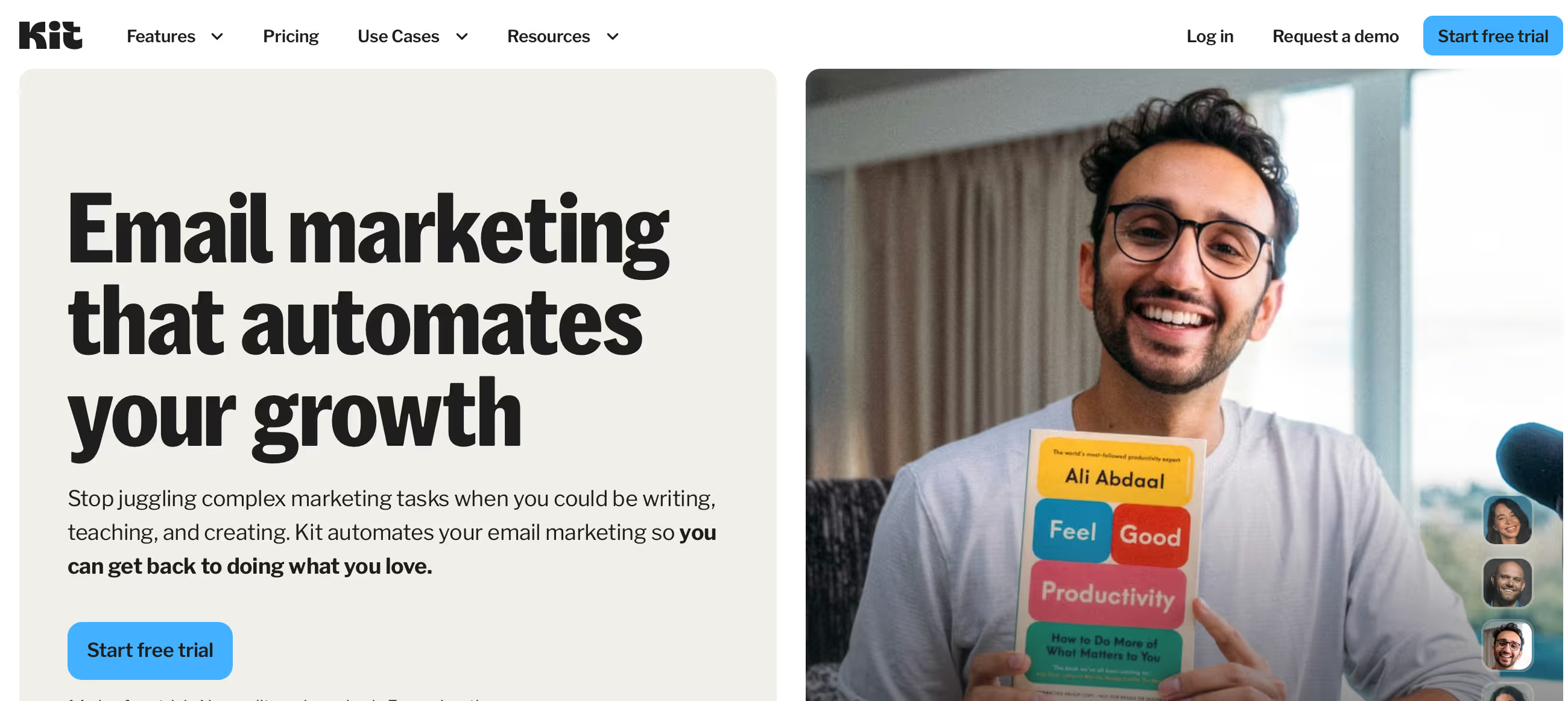
What it is: Email marketing platform built specifically for creators who sell digital products, courses, and newsletters—not another corporate automation tool pretending to understand creators.
Best for: Solo creators, bloggers, course creators, and podcasters with under 50,000 subscribers who value simplicity over design flexibility and need to monetize through digital products.
Main limitation: September 2025 price increase hit hard (35% jump), design templates feel limited compared to Flodesk, and account verification issues create frustrating onboarding experiences for some new users.
Get it if: You're monetizing through courses, paid newsletters, or digital products and want automation that actually makes sense without needing a marketing degree to figure it out.
Skip it if: You're selling physical products, need beautiful email designs, require SMS marketing, want deep CRM integration, or work in ecommerce—there are better tools for those use cases.
⏼ Why Kit?
Email platforms treat creators like second-class citizens. They're built for ecommerce stores or B2B companies, forcing you to wrestle with features you'll never use while hiding the stuff you actually need. Kit flips that script.
⛭ Subscriber-Centric Pricing Saves You Money
One subscriber counts once, regardless of how many lists or tags they have. Mailchimp charges you twice for the same person on two lists. One user switching from Mailchimp: "I saved $20 a month! Mailchimp charged me twice for subscribers on multiple lists." The math matters when you're scaling.
⛭ Free Plan That's Actually Useful
10,000 subscribers with unlimited broadcasts on the free tier. Most platforms cap you at 500-2,000 contacts or throttle your sends. The catch? You're stuck with one automation sequence and Kit branding stays visible. But for testing or starting out, it's genuinely generous.
⛭ Automation Without the Engineering Degree
Visual automation builder with drag-and-drop logic. Katelyn Bourgoin grew Why We Buy newsletter and reported: "We saw a 30% growth in the sale of the two products we feature in those sequences over the last three months." The interface feels like building a flowchart, not coding.
⛭ Built-In Commerce Earns You Money
Sell digital products, run paid newsletters, take tips—all at 3.5% + $0.30 per transaction (including Stripe's cut). Compare that to Substack's 10% or building your own payment system. One creator earned $2-20 per subscriber through Kit's paid recommendations feature alone.

🚀 What Kit Users Typically Achieve
Open Rates Beat Industry Averages
Creators report 40-55% average open rates versus industry standard of 21.5%. Kate Scott maintains 55% with ~7,000 emails sent. André Chaperon hits 80-90% for highly segmented audiences. One user switching from Mailchimp: "I increased the open conversions from 20% to 40% with the same list."
Revenue Growth Through Automated Sequences
Katelyn Bourgoin (Why We Buy newsletter) saw 30% product sales growth over three months using targeted welcome sequences. The paid recommendations feature generates $2-20 per new subscriber when established creators recommend your newsletter. Ken & Mary Okoroafor credit Kit for Sunday Times bestseller status.
Audience Growth Compounds Over Time
Scott Savage grew from under 2,000 to over 30,000 subscribers in under two years. Katelyn Bourgoin added 22,000 subscribers through Kit's recommendations feature: "It is one of the best things that has ever happened to my newsletter." The platform's creator-to-creator discovery network drives genuine growth.
Time Savings From Automation
One G2 user: "Everything is pretty intuitive. And when you do have a problem figuring something out, they have amazing tutorials available." Users report setting up their first campaigns within hours. The visual automation builder eliminates the need for complex workarounds or Zapier for basic creator workflows.
💡 Smart play: Start with the 10,000-subscriber free tier to test automation workflows and deliverability with your audience before committing to paid plans. Verify your domain immediately to avoid deliverability issues.
⏻ How Kit Works
Think less Photoshop, more Google Docs. Kit prioritizes getting emails sent over pixel-perfect design.
Setup Takes Minutes, Not Days
Create an account, verify your domain (critical for deliverability), import your list or build forms. Most users report sending their first broadcast within an hour. The visual automation builder handles welcome sequences, product launches, or drip courses through drag-and-drop.
Tagging Replaces Traditional Lists
Instead of managing separate lists, you tag subscribers based on interests or behaviors. Someone can be tagged "podcast listener" and "course buyer" simultaneously—still counts as one subscriber for pricing. This took some users time to grasp: "It takes a while to get your head around when to use different options like sequences vs workflows."
Forms and Landing Pages Convert Fast
53 landing page templates and customizable forms embed anywhere. The minimal form style looks clean but skips collecting first names by default—a common gotcha. Elizabeth Goddard notes: "Sometimes clients are confused why Kit isn't collecting first names. It's because they're using the minimal form style."
Broadcasts Go Out, Automations Run Background
Send one-time emails (broadcasts) or set up automated sequences triggered by tags, form submissions, or purchases. The platform handles scheduling, A/B testing (Creator Pro only), and tracks opens, clicks, and conversions. Average open rates hit 40-42% versus the industry standard of 21.5%.
⍟ Core Features & Performance
⛭ Automation That Actually Works
Visual automation builder supports up to five entry points per sequence with conditional logic and trigger-based rules. Users consistently praise this: "The intuitive interface and powerful automation features helped me streamline email marketing and build a loyal subscriber base." The system handles abandoned cart recovery, welcome sequences, product launches, and behavior-triggered campaigns without requiring Zapier for basic workflows.
⛭ Deliverability Numbers Tell Two Stories
Kit claims 99.8% deliverability with 40%+ average open rates. Real-world testing shows 76.59% inbox placement with 19.83% landing in spam. That's not terrible, but it's not industry-leading either. Kate Scott reports 55% average open rates with proper domain authentication. André Chaperon hits 80-90% for targeted segments. Your mileage varies based on list hygiene and sender reputation.
⛭ Commerce Tools Enable Direct Monetization
Sell digital products, run paid newsletters ($5-500/month tiers), accept one-time payments or recurring subscriptions, and collect tips—all through Stripe integration. Transaction fees of 3.5% + $0.30 beat Substack's 10% substantially. Support for six currencies: USD, CAD, AUD, NZD, GBP, EUR. The paid recommendations feature alone generates $2-20 per new subscriber for established creators.
⛭ Design Limitations Show Quickly
23 email templates and limited layout customization frustrate design-focused creators. One G2 reviewer: "I didn't like how clunky it was in terms of design. It kept distracting me from creating high-quality content." The email editor improved recently but still lags Flodesk or Mailchimp for visual appeal.
💡 What's Missing: SMS marketing (completely absent), advanced CRM features, sophisticated A/B testing on Creator tier, multichannel campaigns, and enterprise-grade security certifications.
✩ The Verdict: Our Assessment
7.8/10 - Kit delivers exactly what creator-focused email marketing should be: simple automation, fair pricing structure, and genuine monetization tools. The September 2025 price increase and design limitations prevent a higher score.
⚠ Trade-offs: Account verification blocks some legitimate users without clear appeal process. Support quality varies dramatically. Design feels basic compared to Flodesk or Mailchimp.
💡 Skip if: You sell physical products, need beautiful email designs, require SMS capabilities, want deep CRM integration, or work in ecommerce where multichannel marketing matters.
✩ What Users Say: Reviews & Verified Experiences
User ratings: 4.4/5 on G2 (216 reviews), 4.6/5 on Capterra (236 reviews), 3.9/5 on Trustpilot kit.com (77 reviews), 2.0/5 on Trustpilot convertkit.com (64 reviews).
✔ Pros: What Users Love
- Simplicity Wins Consistently: "I've been using Kit for a while now, and I can honestly say it's one of the most creator-friendly email marketing tools out there. What I love most is how easy it is to get started—everything from setting up forms to creating automations feels intuitive," reports Vishwajeet M. on G2.
- Real Growth Numbers: Scott Savage on Trustpilot: "Kit enabled me to grow my platform from less than 2k to over 30k subscribers in less than 2 years." Ken & Mary Okoroafor: "Our business would NOT exist without Kit. We wouldn't be Sunday Times bestsellers without Kit."
- Pricing Model Makes Sense: "There are so many things you can do with Kit that you can't with Mailchimp. Advanced tagging to really organize your audience," explains one switcher who also saved $20/month from Mailchimp's duplicate charging.
- Support Can Be Excellent: "I got VERY fast response from VJ in their support team. She was highly responsive," shares Blog Marketing Academy. When support works, it works well.
✗ Cons: Common Complaints
- September 2025 Price Increase Hurts: "The price then tripled... Bait and Switch. Unresponsive Customer Support," complains one Trustpilot reviewer. Another: "As the company grew the price became higher without significant improvement in the product."
- Account Verification Blocks Legitimate Users: "My brand-new account was shut down before I even had the chance to send my first emails. Kit claimed it was due to concerns about affiliate marketing, even though I hadn't engaged in any affiliate promotions," reports Crystal Andersen on Trustpilot.
- Support Inconsistency Frustrates: "This is the worst support I've had. They have a chat and you get switched from person to person over the course of multiple days," says a Capterra reviewer. The quality gap between best and worst support experiences is massive.
- Design Feels Basic: "The email editor has improved since a year ago, but still has room for improvement," notes a long-time user. Visual creators consistently mention feeling boxed in by limited templates.
⚠ 3 Critical Mistakes to Avoid
Mistake #1: Using Minimal Forms Without Understanding the Trade-off
The Problem: New users select the "minimal" form style for clean aesthetics, then wonder why Kit isn't collecting first names. The minimal style skips name fields by default, leaving you with emails only—making personalization impossible.
The Cost: Generic "Hey there" greetings tank open rates by 15-20% versus personalized "Hey Sarah" emails. You can't fix this retroactively without asking subscribers to re-submit their names, which most won't do.
⚡ How to Avoid It: Use the inline or modal form styles that include name fields by default. If you must use minimal forms, manually add the name field before publishing. Test your forms by subscribing yourself first.
Mistake #2: Skipping Domain Verification and SPF/DKIM Setup
The Problem: Users send broadcasts immediately after setup without configuring domain authentication. Independent testing shows only 76.59% of Kit emails reach the main inbox, with 19.83% landing in spam—largely due to poor domain setup.
The Cost: Your carefully crafted welcome sequence sits in spam folders. New subscribers never see your content. Your open rates hover at 15-20% instead of the 40-55% properly configured accounts achieve.
⚡ How to Avoid It: Complete domain verification and SPF/DKIM authentication before sending your first email. Kit's setup wizard walks you through this in 10-15 minutes. Test deliverability with mail-tester.com before launching campaigns.
Mistake #3: Not Understanding Auto-Upgrade Pricing Mechanics
The Problem: Kit automatically upgrades your plan when you exceed subscriber limits but requires you to email support to downgrade when subscribers decrease. One user hit their limit and got auto-upgraded, then the September 2025 price increase hit: "The price then tripled."
The Cost: Unexpected $50-150/month charges appear on your credit card. Downgrading requires support tickets and waiting periods. Budget-conscious creators get stuck paying for higher tiers they don't need.
⚡ How to Avoid It: Monitor subscriber counts weekly, especially during growth campaigns. Set a buffer of 15-20% below upgrade thresholds. Enable billing alerts in your account settings. Clean inactive subscribers monthly to stay in your current tier. Consider annual billing (16% discount) only after confirming your subscriber count is stable.
FAQ
How does Kit's pricing compare after the September 2025 increase?
Kit raised prices 35% in September 2025—the first increase in 12 years. The free plan still offers 10,000 subscribers with unlimited broadcasts (industry-leading). Paid tiers now start at $39/month for 1,000 subscribers on Creator plan, $89/month for 5,000, and $139/month for 10,000. Creator Pro adds $40/month for advanced A/B testing and subscriber scoring. Annual billing saves 16%. The subscriber-centric pricing model still beats Mailchimp—one subscriber counts once regardless of lists or tags, saving $20+/month for creators on multiple segments. Commerce fees are 3.5% + $0.30 per transaction versus Substack's 10%. The increase stung loyal users, but pricing remains competitive for creators under 25,000 subscribers.
What's the real deliverability rate for Kit emails?
Kit claims 99.8% deliverability with 40%+ average open rates. Independent testing reveals 76.59% inbox placement with 19.83% landing in spam—solid but not industry-leading. The gap comes from users skipping domain verification and SPF/DKIM authentication. Properly configured accounts report 40-55% open rates. Kate Scott maintains 55% average with ~7,000 emails. André Chaperon hits 80-90% for segmented audiences. The platform's deliverability depends heavily on your domain setup, list hygiene, and sender reputation. Complete domain verification before sending your first email. Test deliverability with mail-tester.com. Clean inactive subscribers monthly. The infrastructure works fine; implementation determines results.
Does Kit's free plan actually work for real businesses?
Yes, surprisingly well. The 10,000-subscriber free tier includes unlimited broadcasts, customizable forms, and landing pages—genuinely usable for testing or starting out. The limitations: one automation sequence (paid plans get unlimited), Kit branding stays visible, and third-party integrations are blocked. You can still sell digital products and collect payments. Scott Savage grew from under 2,000 to 30,000+ subscribers, presumably starting on free tier. The free plan works for validating your email strategy, building initial audience, or running a simple newsletter. Upgrade when you need multiple automation sequences, integration with WordPress/Shopify, or want to remove Kit branding. Unlike most freemium tools, this tier isn't crippled—it's a real product.
How does Kit compare to Mailchimp, Flodesk, and ActiveCampaign?
Versus Mailchimp: Kit wins on subscriber-based pricing (no duplicate charges), creator-focused automation, and arguably simpler workflows. Mailchimp wins on design templates (200+ versus 23), SMS marketing, and AI features. At 5,000 subscribers: Kit $89/month versus Mailchimp $100/month. Versus Flodesk: Flodesk dominates on design with stunning templates and flat-rate pricing ($38/month unlimited subscribers)—dramatically cheaper at scale. Kit wins on automation depth, A/B testing, and commerce capabilities. Versus ActiveCampaign: ActiveCampaign offers superior automation with CRM integration, lead scoring, and multichannel campaigns but costs more ($49 versus $39 at 1,000 subscribers) with steeper learning curve. Kit is purpose-built for creators; ActiveCampaign serves sophisticated marketers.
Why do some Kit accounts get terminated immediately after creation?
Account verification blocks some legitimate users without clear appeal process. Crystal Andersen on Trustpilot: 'My brand-new account was shut down before I even had the chance to send my first emails. Kit claimed it was due to concerns about affiliate marketing, even though I hadn't engaged in any affiliate promotions.' Another user: 'Account terminated right after creation for no reason. I wasn't even able to finish my setup.' The pattern suggests overly aggressive fraud prevention triggered by keywords, domain reputation, or account patterns. This creates frustrating onboarding for affiliate marketers, digital product sellers, and certain niches. The appeal process is unclear and slow. If you work in affiliate marketing, cryptocurrency, certain health niches, or use VPNs during signup, prepare for potential verification delays or blocks.
What's the actual learning curve for someone new to email marketing?
Most users send their first broadcast within an hour. The visual automation builder feels intuitive: 'Everything from setting up forms to creating automations feels intuitive,' reports Vishwajeet M. on G2. The complexity emerges in understanding sequences versus visual automations and tagging logic versus traditional lists. One user: 'It takes a while to get your head around when to use different options like sequences vs workflows.' For experienced email marketers, transition is smooth—Email Maximalist confirms this. For complete beginners, expect 2-4 hours getting comfortable with core workflows. Kit Academy offers tutorials and live webinars. The platform prioritizes simplicity over power, making it genuinely accessible. By your third campaign, you'll feel comfortable. The learning is in strategy (what to automate) not mechanics (how to use the tool).
Suggestly
Find your best-fit B2B tool in 90 seconds
✓ Free personalized recommendations
✓ Based on YOUR business needs
✓ No signup required

Kit