✨ Is Hunter.io Right for You?
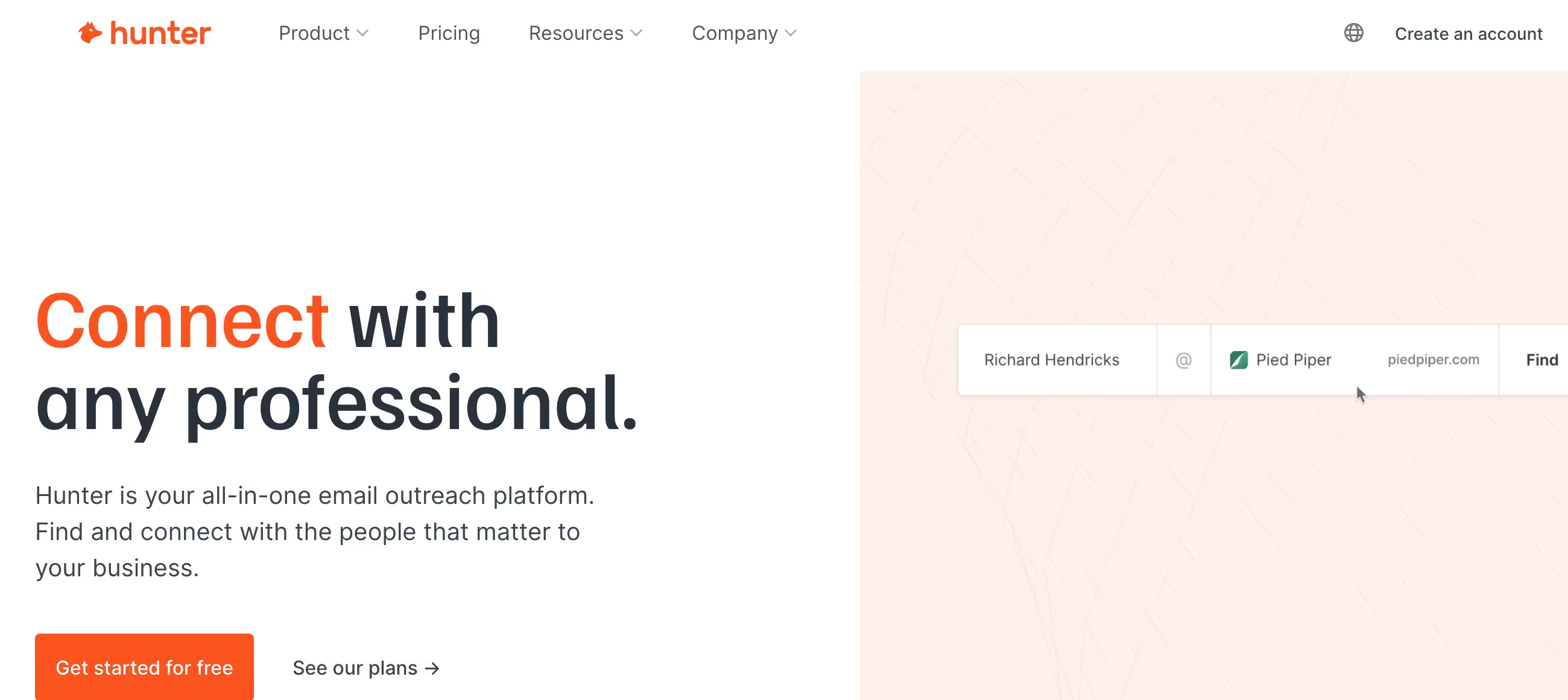
What it is: An email finder and verification platform that scrapes the web to locate professional email addresses, check deliverability, and send cold outreach campaigns—without needing expensive sales intelligence databases.
Best for: Sales reps, recruiters, and marketers who need accurate business emails fast. You're building targeted prospect lists, not buying bloated databases.
Main limitation: Credits reset monthly on monthly plans (no rollover), and email-finding coverage varies—you won't find every email. Smaller companies and private executives are tougher to locate.
Price range: Free plan (50 credits/month) to $299/month (25,000 credits), with 30% savings on annual billing. One credit pool covers both finding and verification.
🎯 Why Hunter.io?
You're wasting hours guessing email formats or manually scraping LinkedIn. Hunter pulls publicly listed emails from 81+ million websites and lets you verify deliverability before you hit send. Fewer bounces, cleaner sender reputation, actual conversations with decision-makers.
The platform does one thing: gets you the email. Domain Search shows everyone at a company. Email Finder pinpoints specific people. Verification checks if addresses work. That's it—no pipeline management, no phone numbers, no lead scoring.
For teams who already have a CRM and just need verified contacts to fill it, Hunter's lean approach keeps costs down. All plans include unlimited team members, so your whole squad shares credits without per-seat charges.
The Tradeoff:
Hunter relies on web scraping, which means coverage depends on online visibility. Tech companies with active blogs and press pages? Easy. Stealth startups and private executives? Spotty. Beats manual searching but lags behind waterfall tools that query multiple databases sequentially.

📈 What Hunter.io Users Typically Achieve
Time Savings That Add Up
Sales teams report cutting prospect research time from 2-3 hours per day to 30-45 minutes. One recruiter mentioned pulling 200 verified emails for a tech hiring push in under an hour—work that previously took a full day of LinkedIn digging.
Real example: A B2B agency building outreach lists for 5 clients went from 15 hours/week on manual research to 3 hours using Hunter's Bulk Domain Search. That's 12 hours back for actual selling.
Deliverability Improvements
Teams using Hunter's verification see bounce rates drop to 2-3%, down from 8-12% when guessing email formats. Lower bounces = better sender reputation = more emails hitting primary inboxes instead of spam.
One marketing team reported a 20.1% open rate on cold campaigns after switching to Hunter-verified lists, up from 12% with unverified addresses.
Lead Volume Increase
Outbound SDRs typically add 50-150 new verified contacts per week with the Starter plan (2,000 credits/month). Growth plan users (10,000 credits) report building lists of 300-500 prospects monthly across multiple campaigns.
Real-world outcome: A SaaS sales team using Hunter's domain search found decision-makers at 70% of their target accounts within their first month, compared to 35% with manual LinkedIn searches.
🛠️ How Hunter.io Works
Think Google for emails. The workflow feels familiar if you've ever searched a company website.
🔍 Three Ways to Find Emails
Domain Search: Type in a company domain (like "anthropic.com"), get a list of everyone Hunter's found there—names, titles, email patterns, confidence scores. One credit per search, but Bulk Domain Search returns up to 10 emails for one credit.
Email Finder: Know the person's name? Enter first/last name + company domain. Hunter predicts the format (first.last@company.com) with a confidence score (20%-95%). One credit per search.
Discover: Filter by industry, company size, location, or job titles to build prospect lists from Hunter's database. Advanced filters unlock on paid plans.
✅ Verification Step
Before sending, verify addresses to catch typos, inactive accounts, or risky "accept-all" domains. Costs 0.5 credits per verification. Repeated verifications of the same email within a month? Free.
📧 Campaigns
Connect your Gmail or Outlook, write sequences with the AI Writing Assistant, schedule follow-ups, track opens/clicks. It's email campaigns, not full automation—you'll still need your CRM for pipeline tracking.
The Chrome extension lets you pull emails directly from any company website without leaving your browser.
⚙️ Core Features & Performance
📊 Email Finding Accuracy
Hunter's hit rate sits around 35-45% overall. U.S. and Western European companies with strong web presence? You'll find 50-60%. Asian markets or stealth-mode startups? Closer to 20-30%. The tool shows you the source of each email (blog post, press release, etc.), which builds trust but doesn't guarantee the person still works there.
Confidence scores (20%-95%) predict pattern likelihood, not verification. A 60% score means "probably works" but isn't verified—send to those and you risk spam folder placement.
🛡️ Verification Keeps Bounces Under 3%
Hunter's verification checks format, domain, and mail server responses. In real testing, bounce rates stayed under 3% when users verified before sending. Auto-verification (paid plans only) runs checks automatically as you build lists.
The catch? Hunter doesn't verify personal webmail (Gmail, Yahoo) or "accept-all" domains that accept everything. Those get flagged as "Unknown," leaving you to decide if they're worth the risk.
🤖 AI Writing Assistant
Paid plans include an AI that drafts cold email copy based on your inputs (recipient info, offer, tone). It's decent for first drafts but you'll still personalize. No A/B testing or warm-up features—this isn't a full cold email platform.
🔄 Integrations
Native connections to Salesforce, HubSpot, Pipedrive, Zoho CRM, plus Zapier for 500+ more apps. The Google Sheets add-on is clutch for bulk operations—search and verify right inside spreadsheets.
⚠️ What's Missing
No phone numbers. No intent data (unless you pay for Signals). No lead scoring or routing. Hunter is the first mile—getting contacts into your system—not the full journey.
⍟ The Verdict: Our Assessment
7.5/10 - Hunter delivers on its core promise: find business emails fast and verify them before you send. It's lean, affordable, and stupidly easy to use. Your team will be productive in under an hour.
⚠️ Trade-offs: Monthly credits reset completely (vanish if unused). Coverage gaps for smaller companies. No phone numbers or lead scoring.
⚠️ Skip if: You need phone numbers for cold calling, guaranteed 80%+ coverage across all regions, or advanced automation with lead scoring and routing.
💬 What Users Say: Reviews & Verified Experiences
User ratings: 4.4/5 on G2 (600+ reviews), 4.6/5 on Capterra (650+ reviews), 4.5/5 on Trustpilot (293 reviews).
👍 Pros: What Users Love
- Speed Saves Hours: "Saves bulk email search a lot of time, with a very quick and accurate domain search," G2 reviewer. Users consistently mention cutting prospect research from hours to minutes.
- Verification Works: "Email verification reduces bounce rates," Capterra reviewer. Sales teams report Hunter "helped us close good deals" by ensuring they reached actual decision-makers, not dead addresses.
- Zero Learning Curve: "I can jump in, search a domain, pull contacts, and get back to outreach fast," G2 reviewer. The simplicity and reliability make it worth using—no training needed.
- Chrome Extension Love: "I love this product and since I downloaded the Chrome Extension it is even better! Saves time when prospecting which means more success," Capterra reviewer.
👎 Cons: Common Complaints
- Coverage Gaps Frustrate: "Sometimes the tool only shows one or two contacts, or none at all, which means I still have to dig around on my own," G2 reviewer. Smaller companies and private executives don't publish emails publicly, leaving Hunter empty-handed.
- Credit System Burns Users: "I paid $150 for 3 months, got busy, and they removed my credits when I canceled," Trustpilot reviewer. Monthly plans reset completely—unused credits vanish. Annual plans (12-month validity) solve this but require upfront commitment.
- Generic Emails Returned: Domain Search often pulls "info@" and "support@" addresses that don't help sales prospecting. You'll need to filter manually for decision-makers.
- Confidence Scores Mislead: "Every now and then the confidence score feels higher than what the real world bounce rate shows," G2 reviewer. High confidence doesn't equal verification—you still need to verify separately.
🚫 3 Critical Mistakes to Avoid
Mistake #1: Treating Confidence Scores as Verification
Hunter's Email Finder gives you a confidence score (20%-95%) when guessing email patterns. That's NOT verification—it's probability. Sending to addresses with 60% confidence means you're gambling with your sender reputation.
💡 Smart play: Always run verification (0.5 credits) before adding contacts to campaigns. The extra step prevents bounces that kill deliverability.
Mistake #2: Picking Monthly Plans Without Using Credits
Monthly plans reset completely—unused credits vanish. One user paid for 3 months, got busy, and lost $150 worth of credits when life got hectic. Annual plans give you 12 months to use credits, plus save 30%.
⚡ Fix: If your prospecting is inconsistent, go annual. If you're burning through credits every week, monthly works—just track your usage in the first billing cycle to avoid waste.
Mistake #3: Expecting 100% Coverage
Teams assume Hunter will find every email. Reality: you'll hit dead ends, especially with smaller companies or private executives who don't publish contact info.
🚀 Workaround: Build your target list 2-3x larger than you need. If you want 100 verified contacts, start with 250-300 prospects. Hunter fills what's findable; you'll manually source or skip the rest. Consider waterfall tools (like FullEnrich) if you need higher coverage—they query 15+ databases sequentially.
FAQ
How does Hunter.io pricing compare to alternatives like Apollo and ZoomInfo?
Hunter starts at $49/month (Starter) with 2,000 credits, or free (50 credits/month) to test. Apollo's Basic is $59/user/month but includes 10,000 monthly credits and phone numbers. ZoomInfo requires custom enterprise quotes (typically $15K-30K/year) and bundles way more features you might not need. Hunter's cheaper if you only need emails and verification—no phone numbers, no intent data, no bloat. You pay for simplicity. If you're doing multi-channel outreach (email + calls), Apollo or RocketReach make more sense. ZoomInfo is overkill unless you're enterprise sales with big budgets.
Do credits roll over if I don't use them all in a month?
On monthly plans: no rollover. Unused credits vanish when the month resets. On annual plans: credits are allocated upfront for the full year and last 12 months. If you buy Starter annually (24,000 credits for $408/year), use them anytime in that 12-month window. Credit Packs (purchased add-ons) expire after 3 months. This catches users off guard—one review mentioned losing $150 in credits after a busy quarter. The fix? Go annual if your usage is unpredictable, or track your monthly burn rate closely on monthly plans.
Can Hunter find emails for people on LinkedIn without Sales Navigator?
Hunter removed LinkedIn integration years ago to comply with LinkedIn's terms of service, so you can't search LinkedIn profiles directly anymore. The workaround: grab the person's name and company domain from LinkedIn manually, then use Hunter's Email Finder. The Chrome extension still works on company websites—just not on LinkedIn itself. If you need seamless LinkedIn prospecting, tools like Apollo or Wiza integrate better. Hunter's strength is domain-based searching (find everyone at a company) rather than person-specific LinkedIn lookups.
What's the actual success rate for finding emails, and does it vary by industry?
Hunter's overall success rate varies by region and company visibility. U.S. tech companies with active blogs and press pages hit 50-60%. European businesses do okay at 40-50%. Asian markets, smaller companies, or stealth-mode startups drop to 20-30%. The platform scrapes publicly available data, so if a company doesn't publish employee emails on their website, Hunter won't find them. One real-world test: real estate sales team found contacts at 40% of target companies, while a SaaS team targeting Series A startups hit 55%. Build your prospect list 2-3x larger than needed to account for the gaps.
Is the AI Writing Assistant worth using for cold emails?
It's decent for first drafts but you'll still personalize heavily. The AI generates subject lines and email bodies based on your inputs (recipient info, offer, tone), which saves 10-15 minutes per campaign. The output tends toward generic—think "I noticed you're in [industry]" rather than hyper-specific references. One user mentioned getting 20.1% open rates with AI-drafted emails, which is respectable but not groundbreaking. The tool shines for high-volume outreach where you need baseline templates fast. For high-value accounts or complex sales, write custom copy. The AI is free on all paid plans, so experiment without extra cost.
How does Hunter handle "accept-all" domains that accept any email address?
Hunter flags these as "Unknown" during verification because accept-all servers respond as if every address is valid—even fake ones. You can't know for sure if name@company.com works until you send. About 15-20% of domains use accept-all policies, common in tech and enterprise companies. The choice: send anyway (risking bounces) or skip those contacts. One workaround users mention: send to accept-all addresses last in your sequence, after you've burned through verified leads. That way if bounces happen, they don't tank your sender reputation. Competitors like Scalelist claim better verification for accept-all domains, but no tool solves this perfectly—it's a server-side limitation, not a Hunter flaw.
Suggestly
Find your best-fit B2B tool in 90 seconds
✓ Free personalized recommendations
✓ Based on YOUR business needs
✓ No signup required

Hunter.io