◑ Is Cloudways Right for You?
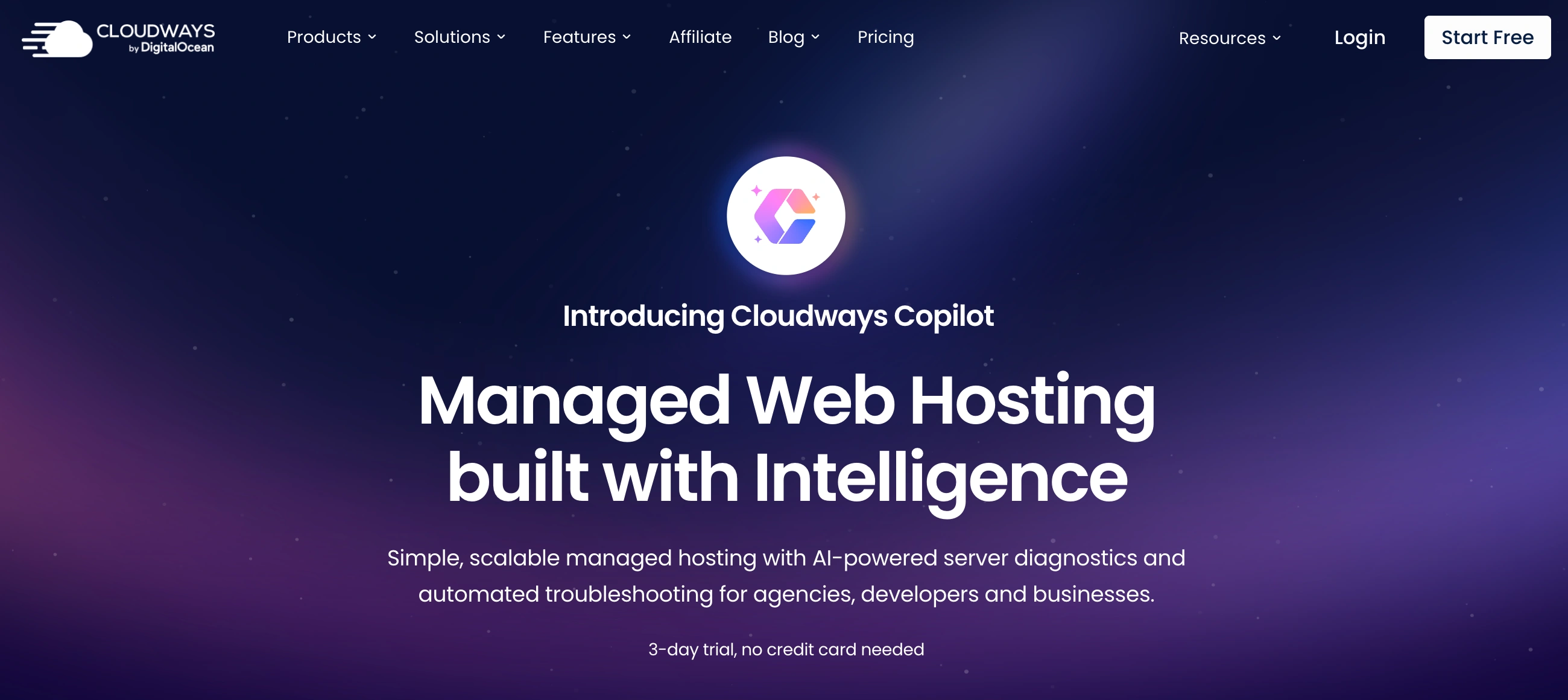
What it is: Managed cloud hosting platform that sits on top of five cloud providers (DigitalOcean, Vultr, Linode, AWS, Google Cloud), giving you cloud infrastructure without DevOps complexity.
Best for: Digital agencies managing multiple client sites, WooCommerce stores needing scalability without breaking budgets, developers who want server control without root access headaches, and SMBs outgrowing shared hosting but not ready for unmanaged VPS.
Main limitation: 220% markup over direct cloud pricing, no email hosting or cPanel, support quality deteriorated post-DigitalOcean acquisition, and billing complaints plague Trustpilot reviews. You're paying for convenience but losing flexibility—no root access, PHP applications only.
Get it if: You're running WordPress/WooCommerce at scale, managing client sites as an agency, comfortable with SSH basics, want month-to-month flexibility across multiple cloud providers, or need dedicated resources without shared hosting renewal price shocks.
Skip it if: You need full root/server control, run non-PHP applications (Node.js, Python), want included email hosting, prefer phone support, need cPanel familiarity, have tight budgets (direct cloud costs 60% less), or want hands-off WordPress management like Kinsta provides.
🎯 Why Cloudways?
Shared hosting crashed your site during a traffic spike. Managed WordPress specialists cost $35+ monthly for one site. Cloud providers require DevOps expertise you don't have. Cloudways bridges the gap—cloud performance at mid-tier pricing with one-click setups.
💰 Pricing Stays Predictable
Traditional hosts lure you in at $3.95/month, then jack renewal to $14.99. Cloudways? Your $14/month stays $14/month. Annual prepay saves 25%, but you're not locked in. The pay-as-you-go model means scaling up costs more, but scaling down actually saves money—try getting HostGator to refund you.
⚡ Cloud Without the Learning Curve
Spinning up a DigitalOcean droplet requires SSH knowledge, server hardening, caching setup, and firewall configuration. Cloudways handles that in 8 minutes with clicks. You get Varnish, Redis, Nginx, and Git deployment without reading documentation.
🌐 Multi-Cloud Flexibility Saves You
Kinsta locks you to Google Cloud. WPX uses proprietary infrastructure. Cloudways lets you test DigitalOcean's price against AWS's reliability, then switch servers in 20 minutes if performance disappoints. That optionality matters when your business depends on uptime.
📈 Scalability That Actually Works
Your WooCommerce store went viral on Reddit. Shared hosting would collapse. Cloudways lets you upgrade from 2GB to 8GB RAM in under 5 minutes with zero downtime. The server handles 500 concurrent users where shared hosting taps out at 50.
⏱️ The Time Savings Add Up
Agencies running 30+ client sites on one Cloudways server save 12+ hours monthly versus managing individual shared hosting accounts. Staging environments deploy in one click. Backups restore in minutes. The efficiency compounds when you're juggling multiple projects.

📈 What You Can Actually Expect
Your Site Will Load Faster
Moving from Bluehost or HostGator? Expect load times to drop from 3-5 seconds to under 1 second. The dedicated resources and caching stack make the difference immediately noticeable. Users report Google PageSpeed scores jumping 20-30 points without other changes.
Agency Efficiency Improves Significantly
Managing 20+ client sites on one Cloudways server versus separate shared hosting accounts saves 8-12 hours monthly. One-click staging, batch updates, and unified billing eliminate administrative friction. The time savings compound as your client roster grows.
Scaling Handles Real Traffic Spikes
Your WooCommerce store gets featured on a major blog. Shared hosting would crash within minutes. Cloudways lets you upgrade from 2GB to 8GB RAM in under 5 minutes with brief downtime. The server handles 500 concurrent users where shared hosting taps out at 50.
Support Will Test Your Patience
Expect AI chatbot screening before reaching humans. Simple questions get answered same-day. Complex issues? Prepare for ticket ping-pong with different agents giving conflicting advice. Premium Support ($100/month) skips the queue but doesn't guarantee better expertise.
Where You'll Hit Friction
First server takes 30-60 minutes figuring out the dashboard if you're used to cPanel. Bandwidth overages on AWS/GCP surprise people—that $38 monthly plan jumps to $150 during traffic spikes. No email hosting means setting up external services. Entry-level 1GB plans struggle with real business sites.
💡 Here's what works: start with DigitalOcean 2GB ($24/month) minimum for business sites. Budget $6-10/month extra for CDN and email. Use staging environments religiously before pushing updates. Keep external backups—Cloudways local backups disappear if your server dies.
🛠️ How Cloudways Works
Think simplified cloud, not shared hosting with limits. The workflow mirrors server management but removes the technical friction.
Setup
Choose your cloud provider (DigitalOcean starts at $11/month), pick your server size, select a data center from 65+ locations. Cloudways provisions the server in 8-12 minutes with NGINX, caching, and security pre-configured. Install WordPress, Magento, Laravel, or other PHP applications with one click.
Server Management
The proprietary dashboard replaces cPanel. Vertical scaling (add RAM/CPU) takes 5 minutes with brief downtime. Clone servers for staging. Set up automated backups (hourly to weekly with 4-week retention). Free SSL certificates auto-renew through Let's Encrypt.
Application Deployment
Connect via SFTP/SSH or use Git deployment. Cloudways supports unlimited applications per server—run 15 client sites on one $42/month box versus paying $15/site elsewhere. Each app gets isolated from neighbors for security.
Performance Optimization
Enable Varnish (full-page caching), Redis (object caching), Memcached (session caching), or Breeze (WordPress plugin). CloudwaysCDN costs $1/25GB or integrate Cloudflare Enterprise at $4.99/month for global edge caching. Swap PHP versions (7.4 to 8.3) per application without affecting others.
Monitoring & Support
Real-time server monitoring shows CPU, RAM, bandwidth usage. Receive alerts before hitting limits. Support starts with AI chatbot, escalates to tickets, and Premium Support ($100/month) adds priority queue access. The free migration service handles one site transfer.
⚙️ Core Features & Performance
☁️ Five Cloud Providers, One Interface
DigitalOcean ($11-489/month) offers the best price-to-performance for most users. Vultr ($14-489/month) adds slightly better I/O. Linode ($14-400/month) runs neck-and-neck with DO. AWS ($38.56+ starting) and Google Cloud ($37.45+ starting) cost significantly more but deliver enterprise-grade infrastructure. Choose based on your needs: agencies typically choose DigitalOcean, enterprises pick AWS/GCP.
⚡ Lightning Stack Performance
NGINX web server with PHP-FPM handles 65% faster response times versus Apache. Multi-layer caching (Varnish + Redis + Memcached + Nginx FastCGI) delivers sub-100ms load times on optimized sites. TTFB averages 376-405ms domestically, drops to 65ms globally with Cloudflare CDN enabled. WooCommerce benchmarks show 58% more checkouts per second versus traditional stacks.
🔒 Security Without Extra Cost
Imunify360 firewall plus Fail2Ban brute-force protection comes standard. Application isolation prevents one hacked site from compromising others on your server. DDoS mitigation handles Layer 3/4 attacks automatically. Patchstack vulnerability scanning ($4/app/month add-on) monitors for WordPress plugin exploits.
💾 Backup Strategy That Works
Automated backups run hourly, daily, or weekly with customizable retention up to 4 weeks. Local backups store on the same server (fast restore but vulnerable if server fails). On-demand backups before major updates. One-click restoration from any backup point. External backup solutions (Jetpack, UpdraftPlus) work if you want off-site redundancy.
⚠️ What's Missing: Email hosting (requires $1/mailbox add-on or external service), root/sudo access, cPanel/Plesk, ability to use your own cloud credentials, non-PHP application support.
📊 The Verdict: Our Assessment
8.7/10 - Cloudways delivers managed cloud hosting that actually balances power and usability for agencies and developers. Strong technical foundation undermined by post-acquisition support decline and billing issues.
⚠️ Trade-offs: You're paying 220% premiums for convenience. No email hosting or cPanel. Support quality dropped after DigitalOcean acquisition. Billing complaints frequent on Trustpilot.
⚠️ Skip if: You need full server control, run Node.js/Python, want included email, prefer phone support, or have budget constraints (direct cloud saves 60%).
💬 What Users Say: Reviews & Verified Experiences
User ratings: 4.7/5 on G2 (1,089 reviews), 4.3/5 on Capterra (88 reviews), 4.6/5 on Trustpilot (3,248 reviews).
👍 Pros: What Users Love
- Performance Delivers on Promises: "I have used MANY hosting companies over the 25+ years... Cloudways is always very responsive and gets any issues resolved quickly," web designer on Trustpilot. Users consistently praise sub-second load times and uptime reliability.
- Agency Workflows Shine: "Migrating approximately 40 websites has been a breeze," agency owner on G2. The multi-site management on single servers saves hours versus juggling separate hosting accounts.
- Scaling Actually Works: "Went from 3M to 9M monthly visitors without performance degradation," Pangolia case study. Vertical scaling handles traffic spikes that would crash shared hosting.
- Server Control Without Complexity: "Git deployment, staging environments, PHP version switching—everything I need without SSH nightmares," developer on Capterra. The balance between power and usability hits the sweet spot for technical non-DevOps users.
👎 Cons: Common Complaints
- Support Quality Dropped Post-Acquisition: "Support left my client's site down for 2 days with 500 errors," user who switched to BigScoots. "They would argue and send the same steps over and over," frustrated customer on G2. The bot-first approach delays resolution.
- Billing Problems Plague Users: "Despite cancelling, I continued to receive charges on my card," Capterra reviewer. "They deleted my server over a $15 unpaid balance without warning," Trustpilot complaint. Users report servers wiped for small billing hiccups.
- Pricing Markup Frustrates Cost-Conscious: "I'm paying $42/month for resources that cost $18 directly from DigitalOcean," Reddit user. The convenience premium stings when you're comfortable managing servers yourself.
- Entry-Level Plans Underperform: "The 1GB plan struggled with basic WordPress sites," review aggregation. Multiple sources recommend 2GB minimum for business sites—making the $11 entry price misleading.
🚫 3 Critical Mistakes to Avoid
Mistake #1: Choosing AWS/GCP Without Understanding Bandwidth Costs
A consultant launched a client on AWS because "AWS sounds more professional." The $38 starting price seemed reasonable. First month bill? $127. Bandwidth overages at $0.12/GB versus DigitalOcean's $0.02/GB crushed the budget. The traffic wasn't even unusual—AWS/GCP bandwidth pricing just operates differently.
⚠️ Fix it: Use DigitalOcean, Vultr, or Linode unless you specifically need AWS/GCP enterprise features. Same Cloudways interface, 60% lower bills. AWS/GCP make sense for compliance requirements or specific integrations, not general WordPress hosting.
Mistake #2: Starting with 1GB Entry Plans
An agency moved five client sites to the $11/month DigitalOcean plan to test Cloudways. Sites loaded slowly, wp-admin lagged, and one WooCommerce store crashed during checkout. They upgraded to 2GB within a week, realizing the entry tier can't handle business workloads.
⚠️ Fix it: Budget $24-42/month (2-4GB RAM) minimum for business sites. The $11 plan works for staging environments or static brochure sites, not ecommerce or high-traffic blogs. Calculate your actual resource needs before choosing server size.
Mistake #3: Ignoring Email Hosting Requirements
A startup migrated their WordPress site to Cloudways assuming email came bundled like traditional hosting. Two days before launch, they discovered Cloudways doesn't include email. Scrambling to set up Google Workspace or Rackspace email ($1/mailbox/month add-on) delayed their launch by a week.
⚠️ Fix it: Plan email hosting separately before migration. Use Google Workspace ($6/user/month), Zoho Mail ($1/user/month), or Cloudways' Rackspace add-on ($1/mailbox/month). Configure DNS MX records during migration, not after going live.
FAQ
How does Cloudways pricing actually compare to direct cloud providers?
DigitalOcean charges $6/month for a 1GB droplet directly. Cloudways charges $11/month for the same resources—an 83% markup. That $5 difference buys you managed services: pre-configured caching stack, automated backups, SSL certificate management, migration assistance, and support access. For a 4GB server, DigitalOcean charges $24 directly while Cloudways charges $42 (75% premium). The markup shrinks slightly at higher tiers. Budget-conscious users comfortable with SSH should go direct. Everyone else pays for the convenience of not managing servers manually.
Can I migrate from Cloudways to another host without downtime?
Yes, with planning. Export your site files via SFTP and database via phpMyAdmin. Upload to your new host and update DNS records with appropriate TTL reduction beforehand. The new host's IP goes live once DNS propagates (typically 24-48 hours). Use a migration plugin like Duplicator or All-in-One WP Migration for simpler transfers. Cloudways doesn't lock you in technically, but they make outbound migrations manual—no one-click export like cPanel's backup wizard. Budget 2-4 hours for careful migration or hire someone ($50-150) if you're managing client sites.
What happened to Cloudways support quality after the DigitalOcean acquisition?
DigitalOcean acquired Cloudways for $350 million in August 2022. Users report noticeable support decline since: bot-first screening delays human contact, different agents give conflicting advice on the same issue, and response quality varies wildly. Pre-acquisition, users praised responsive support. Post-2023, Trustpilot fills with complaints about unresolved tickets and scripted responses. Premium Support ($100/month) jumps the queue but doesn't guarantee better expertise. The technical foundation stayed strong—it's the human support layer that degraded.
Does Cloudways work for high-traffic ecommerce or just small sites?
Cloudways handles serious ecommerce. Pangolia scaled from 3M to 9M monthly visitors without migration. Multiple WooCommerce stores report 500+ concurrent users during sales without crashes. The key is proper server sizing—2GB minimum, realistically 4-8GB for stores doing meaningful revenue. Enable Redis object caching, use the Cloudflare Enterprise CDN ($4.99/month), and leverage autoscaling on the newer Cloudways Autonomous product. Kinsta and WPX provide more hand-holding for ecommerce, but Cloudways offers better scalability at lower cost once you learn the platform.
What's the real learning curve coming from cPanel shared hosting?
Expect 30-60 minutes figuring out where everything lives. The Cloudways dashboard doesn't match cPanel's structure—file management uses SFTP instead of File Manager, databases require phpMyAdmin separately, and email configuration happens externally. Once you map the mental model (applications = sites, servers = containers), it clicks. WordPress users adapt fastest because the WP interface stays identical. The steepest part? Understanding server resources and when to upgrade. Budget an afternoon for your first site migration including DNS configuration.
Should I choose Cloudways Autonomous or the traditional server model?
Traditional servers for most users. Cloudways Autonomous (Kubernetes-based, starts $35/month) makes sense if you need auto-scaling for unpredictable traffic—think news sites or campaign landing pages. It handles unmetered visits with usage-based resource pricing. The catch: more expensive for steady-state workloads and overkill for typical agency/small business needs. Traditional servers give predictable monthly costs and work fine for 95% of use cases. Test Autonomous if your traffic varies 10x between slow and peak periods.
Suggestly
Find your best-fit B2B tool in 90 seconds
✓ Free personalized recommendations
✓ Based on YOUR business needs
✓ No signup required

Cloudways